"It's simply what Chattanoogans do each Sunday."
That's how Chris Thomas, executive director of the Chattanooga Market, describes the ritual his organization has run at First Horizon Pavilion for 26 seasons straight. For a quarter century, if you asked a local where the market was this weekend, there was exactly one answer. This year there are two.
The market didn't just add a second stop. It planted itself on a stretch of riverfront the city has spent the better part of two years and tens of millions of dollars rebuilding around a brand-new baseball stadium. Which market you choose on a given Sunday now says something about which version of Chattanooga you feel like spending your morning in.
Twenty-six years at one address
The original market runs out of First Horizon Pavilion at 1801 Reggie White Blvd, a 50,000-square-foot open-air structure next to Finley Stadium that can hold 3,000 to 4,000 people and comes with roughly 2,000 parking spaces on site. It's also home to the annual 4 Bridges Arts Festival every April, so the pavilion earns its keep year-round, not just on market days.
This year's season opened with a two-day Opening Weekend on April 25 and 26, and settled into its usual Sunday slot, 11 a.m. to 5 p.m., running May through November. Every week gets its own theme, which is how you end up with a calendar as specific as this one: a Midsummer Solstice Sunday on June 14 with Scenic City Shakespeare performing alongside musician Mikki Zip, a Peach Festival on July 12 that turned the aisles into peach cobbler, peach salsa, and peach-scented candles with the band Resonauts providing the soundtrack, and National Farmers Market Week on August 2, which shifted the spotlight from shopping to the growers themselves, with live sets from Eli Palmer and Josh Branum. The organization also has a back-to-school edition on this month's calendar, aimed at families stocking up before classes start.
None of that is new in spirit. Chattanooga has been showing up to this pavilion on Sundays for 26 years. What's new is that showing up here is no longer the only option.
Then the market crossed the river into the Foundries District
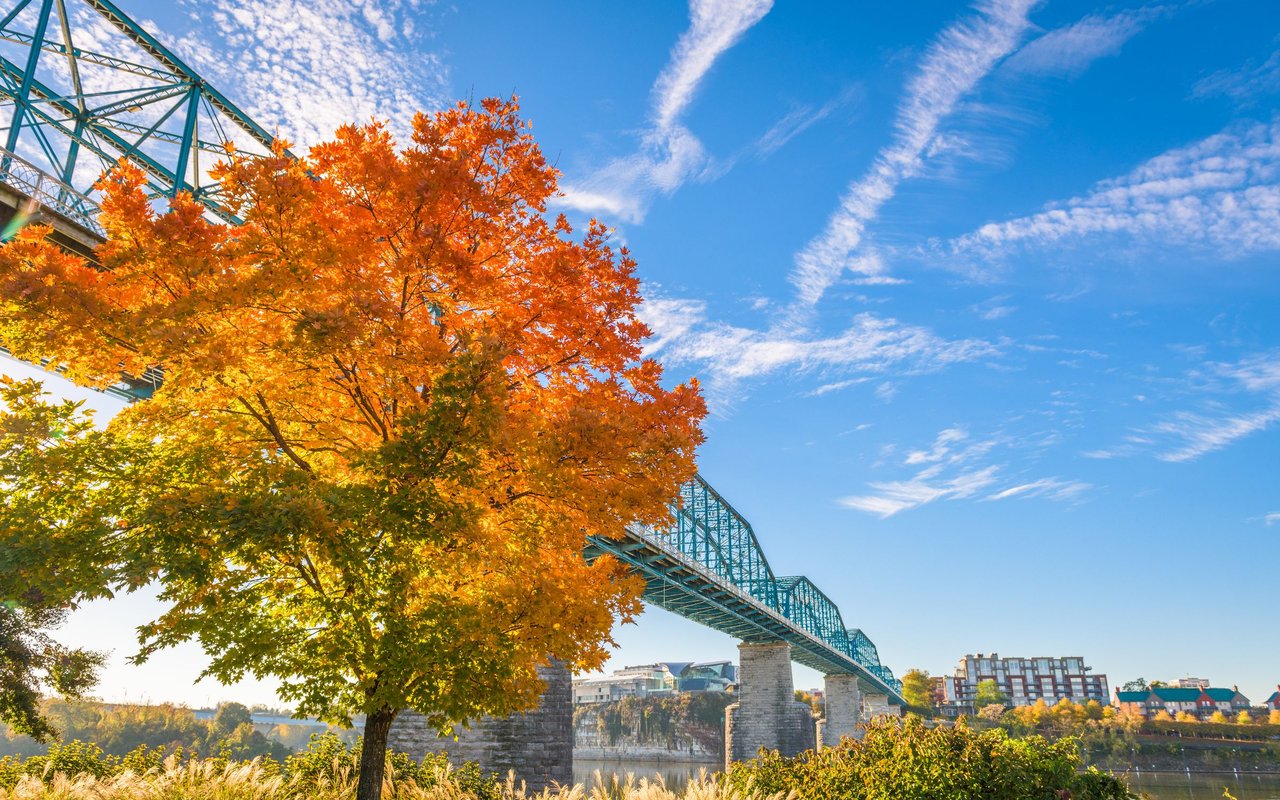
Sometime this year, the Chattanooga Market added a second, weekly gathering at the Foundries District, which its own site occasionally labels the River Market. That name matters, because the location isn't a random second venue. It's the same ground the city just spent a year rebuilding around the new Chattanooga Lookouts stadium at Erlanger Park.
In April 2026, the city reopened an expanded Tennessee Riverwalk and the West 26th Street trailhead outside Erlanger Park after months of construction, more than doubling trailhead parking from 9 spaces to 26 and lining the path with new lighting and landscaping that incorporates native trees and materials salvaged from the old U.S. Pipe and Wheland Foundry that once occupied the site, according to the city's own announcement. One resident who lives nearby, Brooke Tyll, told NewsChannel 9 after the reopening that it felt "so much different" and that seeing it finished "nice and shiny and new" surprised her given how quickly the work moved.
The stadium itself carries a $72 million price tag, and the city and county structured the financing so it draws on hotel and motel taxes and future stadium revenue rather than current property taxes, with roughly 14 acres of the site donated by Perimeter Properties specifically so the Riverwalk could run through it, according to the city's South Broad revitalization page. This is the same corridor city officials once described, in that same announcement, as a stretch where "belching black clouds" from pit fires gave way to a rusted industrial site before redevelopment took hold. That's the ground the new market is standing on.
Same organization, two very different rooms
The pavilion is a fixed, covered venue with 26 years of muscle memory behind it. You know the parking, you know the layout, you know roughly what 3,000 to 4,000 people moving through a Sunday afternoon feels like. The Foundries District market sits inside a corridor that is still, in a real sense, being built around it. There's fresh concrete, reused foundry brick worked into the landscaping, and a stadium that only opened its gates in April.
That newness cuts both ways. It means you get to watch a neighborhood take shape in real time. It also means the market's schedule there hasn't had 26 years to calcify into muscle memory the way the pavilion's has, so it's worth checking the Chattanooga Market's own event calendar for the current day and hours before you plan around it, rather than assuming it mirrors the Sunday routine.
How to actually plan your weekend around this
- Want the full production, hundreds of vendors, guaranteed parking, and a theme that's been planned months out? That's the pavilion, Sundays through November.
- Want to see what the city has actually built around Erlanger Park while you shop? That's the Foundries District market, with the schedule worth a quick check first.
- Can't do weekends at all? The Main Street Farmers' Market runs every Wednesday at 4 p.m., year-round, at the corner of West 20th and Chestnut in Southside. It's smaller and more focused, mostly produce, meats, eggs, and baked goods, with food truck regulars like Attack of the Tatsu and Hello Monty, and it sits on the same block as Main Street Meats, according to NoogaFinder's 2026 market guide.
What the split actually tells you
A 26-year-old institution doesn't open a second weekly gathering somewhere it doesn't expect steady foot traffic. The Chattanooga Market runs on the same logic as any organizer choosing a venue: you go where people already are, or where you're confident they're about to be. Placing a market at the Foundries District is a bet that the corridor around Erlanger Park has stopped being a construction zone and started being a place people actually spend Sunday mornings, the same way they've spent them at the pavilion for a quarter century.
That's the real story here, and it's one you won't find by searching "things to do in Chattanooga this weekend." You have to already know that the market split, and why the second address happens to sit on land the city itself once wrote off, to understand what it means that a family-run Sunday tradition decided it was worth planting a flag there too.
Grace Frank Group keeps an eye on details like this because they tell you where a neighborhood's daily rhythm is actually headed, long before it shows up in a market report. If you're curious what else is changing in the corridors around you, or you just want to talk through what a stretch like this means for a street you already call home, reach out any time.