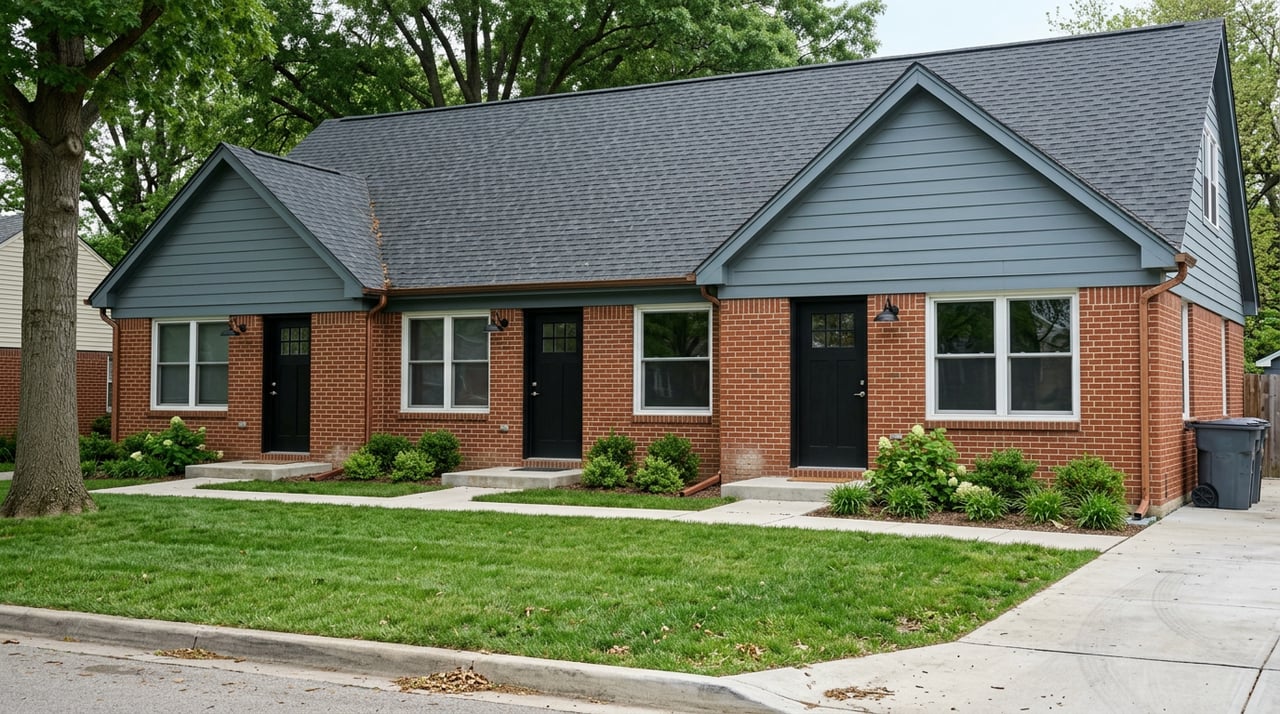
Thinking about buying a duplex or triplex in Soddy-Daisy to build cash flow close to Chattanooga? You are not alone. Investors are eyeing this owner-heavy market for steady rents, lower price points, and simple operations in 2 to 4 unit buildings. In this guide, you will get local price and rent context, vacancy risks to watch, the zoning rules that matter, financing paths for 2 to 4 units, and a quick underwriting checklist to help you move with confidence. Let’s dive in.
Why Soddy-Daisy works for small multifamily
Snapshot of the city and residents
Soddy-Daisy is a small, commuter-friendly city with about 13,400 residents and a high owner-occupied rate near 75.7 percent. Median household income is roughly $75,000, and the mean commute sits around 26.5 minutes, which fits a bedroom-community profile that feeds into the Chattanooga job base. The U.S. Census also reports a median gross rent of about $1,047, which is a lagging five-year estimate that can sit below current asking rents. You can review the latest local figures in the Census QuickFacts for Soddy-Daisy to ground your assumptions.
That owner-heavy profile shows up across the city's residential pockets, from established lake-adjacent neighborhoods to gated enclaves like 3 Gorges on Mowbray Mountain. For a small multifamily buyer, the takeaway is that duplex and triplex stock clusters in the more conventional residential districts, not in the low-density, owner-occupied areas that make up much of Soddy-Daisy.
What drives rental demand
Regional employment anchors include health systems, insurance, manufacturing, education, and logistics. Employers commonly cited in the metro include Erlanger, BlueCross BlueShield of Tennessee, Volkswagen Chattanooga, Unum, CHI Memorial, TVA, and McKee Foods. This mix supports demand from a range of renter households who value affordability and access to work centers. For context on Tennessee rental markets and employer mix, see this overview of statewide dynamics.
Inventory and price expectations
Small multifamily options exist in Soddy-Daisy, but supply is thin and listings appear in pockets. Duplexes are the most common 2-unit option, with recent public MLS snapshots showing asking prices often in the low to mid 300s and up into the low 400s based on unit size, condition, and rent roll quality. On a per-door basis, that can equate to roughly $140,000 to $210,000 per unit for a duplex. Triplexes and small packages trade less frequently and price varies widely with condition, unit mix, and income documentation.
Because available stock is limited, plan to watch the MLS daily, set alerts for 2 to 4 unit properties, and be ready to underwrite quickly. Focus on buildings with separate utilities, straightforward layouts, and clean permit histories. Simple, well-located duplexes with off-street parking tend to lease faster and keep costs predictable.
Rent benchmarks and vacancy risk
How to set rent assumptions
Census data puts Soddy-Daisy’s median gross rent at about $1,047, but that number lags current conditions. For metro context, ApartmentList reports Chattanooga’s recent asking median around $1,410 for 1-bedrooms and $1,568 for 2-bedrooms. When you want a conservative underwriting floor, many investors reference HUD and state fair market rent schedules. The FY 2024 FMR for a 2-bedroom in the Chattanooga MSA sits near $1,232, which can serve as a prudent baseline while you validate unit-level comps.
- Metro asking rents: ApartmentList Chattanooga rent trends
- Conservative rent floor: THDA Fair Market Rent documentation
Vacancy and concessions to watch
The Chattanooga metro had a heavy wave of new apartment deliveries in 2024, with more than 2,600 units completed. The same report shows effective occupancy near 89 percent, which implies vacancy around 11 percent, and softer rent growth year over year. That dynamic can pressure concessions and leasing timelines, especially for older B and C product that competes on price. Small 2 to 4 unit buildings often attract longer-term renters and compete on value, yard space, and convenience, but it is still smart to run sensitivity on vacancy and lease-up timing.
- Regional context: Matthews Multifamily Report for Chattanooga
Practical tip: consider modeling 7 to 10 percent vacancy for year one until you see stabilized performance, then adjust once you have 6 to 12 months of actuals. Always confirm with local property managers for expected lease-up time by unit type.
Zoning, permits, and compliance
What is allowed for 2 to 4 units
Soddy-Daisy’s zoning ordinance defines two-family (duplex) and multifamily (3 or more units) uses and sets standards for separation, parking, recreation area, and height. Duplexes are typically permitted in residential districts, subject to lot size and frontage requirements. Triplex and fourplex conversions or new small clusters may require a Planned Unit Development or a special permit, which adds review steps and timelines. If you are evaluating a conversion or redevelopment, review the current ordinance and speak with the city about the parcel’s zoning and processes.
- Read the ordinance: Soddy-Daisy Zoning Ordinance, Revised May 2025
Permit checks that protect your deal
Before you go under contract, confirm that all existing units are legal and were permitted. Ask for certificates of occupancy, past permits, and any final inspection records. Verify parking counts, trash service setup, and any fire separation rules that may apply to attached units. Unpermitted units can reduce appraised value, block financing, and delay closings.
Financing pathways for 2 to 4 units
FHA house-hack basics
FHA financing can be a powerful way to buy a 2 to 4 unit property if you plan to live in one unit. Duplex purchases can qualify with as little as 3.5 percent down for owner-occupants, subject to lender overlays. For triplex and fourplex purchases, FHA adds a self-sufficiency test, which requires the appraiser’s market rents to cover principal, interest, taxes, and insurance, plus reserve requirements that are typically three months of PITI. Always confirm current rules and overlays with your lender.
- FHA overview and self-sufficiency test: MortgageResearch.com summary
Conventional and VA options
Conventional loans on 2 to 4 units are widely available through regional banks and national lenders. Down payments often range from 15 to 25 percent depending on occupancy, credit, and debt service coverage. VA financing can also be used for 2 to 4 units when you occupy one unit, subject to lender interpretation and overlays. Get preapproved early, and make sure your lender underwrites projected or current rents correctly.
What lenders will ask for
Be prepared with two years of tax returns, recent pay stubs or income documentation, a rent schedule or existing leases, and a rough operating budget. For 3 to 4 units under FHA, ask your lender to run the self-sufficiency test using conservative appraiser rent estimates before you submit an offer. If the property is vacant or partially vacant, clarify how the lender will treat projected rents in underwriting.
Underwriting steps and a sample pro forma
Due diligence checklist
Use this punch list to protect your upside and avoid surprises:
- Leases and deposits. Verify current leases, rent history, expiration dates, and deposit handling. Note any month-to-month tenants versus fixed terms.
- Utilities. Confirm separate meters or the billing method for water, gas, and power. Utility setup affects net operating income and tenant turnover.
- Zoning and permits. Check the city’s permitted use, past permits, and code compliance. Reference the zoning ordinance for definitions and standards.
- Physical systems. Prioritize roof, HVAC, foundation, electrical, and plumbing. For older buildings, consider professional checks for lead-based paint, mold, or asbestos.
- Market comps. Pull 3 to 6 nearby rental comps by unit type and 3 to 6 sold comps to calibrate price per unit and gross rent multiplier.
- Management and reserves. Price out property management, routine maintenance, make-ready costs, and a reserve plan. Confirm your manager’s capacity for small portfolios.
Simple pro forma example
Here is a quick way to translate asking price and rent into a cap rate. Assume a duplex purchase at $300,000 with each unit renting at $1,300 per month. That yields gross annual rent of $31,200. If you estimate operating expenses at 40 percent of gross, expenses are $12,480 and net operating income is about $18,720. That implies a cap rate near 6.2 percent. Always run sensitivity at plus or minus 10 to 20 percent on rents, and adjust vacancy and expenses to reflect current market conditions.
Action plan for your first deal
- Define your buy box. Choose target price, unit mix, and minimum cash-on-cash and cap rate. Set your conservative rent baseline using THDA’s FMR and validate with local comps.
- Get financing dialed in. Secure preapproval specific to 2 to 4 units. If you plan to house hack a triplex or fourplex, ask your lender to run the FHA self-sufficiency test up front using the FHA guidance summary.
- Track supply daily. Inventory is limited, so set MLS alerts and be ready to tour quickly. Thin supply rewards prepared buyers who can underwrite and submit clean offers.
- Underwrite like a pro. Use metro vacancy context from the Matthews Chattanooga report and verify a realistic lease-up path with a local manager.
- Plan for management. Decide whether you will self-manage or hire a local manager experienced with small portfolios. Factor in fees and expected response times.
If you want local deal flow, clean underwriting, and seasoned negotiation on your side, our team can help you source and execute 2 to 4 unit acquisitions in Soddy-Daisy and across Greater Chattanooga. From first duplex purchases to 1031 exchanges and multi-property portfolios, we bring data-informed guidance and investor-grade execution. Reach out to Grace Frank to start a focused search and underwriting plan tailored to your goals.
FAQs
What should a first-time investor know about Soddy-Daisy duplex pricing?
- Expect many duplexes to list in the low to mid $300,000s and into the $400,000s depending on unit size, condition, utilities, and rent roll, with limited inventory requiring fast underwriting.
How do I pick a conservative rent number for underwriting in Soddy-Daisy?
- Use the Chattanooga MSA 2-bedroom fair market rent near $1,232 as a conservative floor, then validate with unit-level comps and context from ApartmentList’s metro rent trends.
What vacancy rate should I budget in the current market?
- The metro shows about 11 percent vacancy from new supply pressure, so it is prudent to model 7 to 10 percent in year one and adjust once stabilized, based on the Matthews report.
Are duplexes and triplexes allowed by Soddy-Daisy zoning?
- Duplexes are defined and commonly permitted in residential districts, while triplexes and small clusters may require a Planned Unit Development or a special permit, so review the city zoning ordinance and verify the parcel’s permitted uses.
What is the FHA self-sufficiency test for 3 to 4 units?
- For owner-occupied triplexes and fourplexes, projected rents must cover principal, interest, taxes, and insurance, and lenders typically require reserves, so confirm details with the FHA program summary.
What goes into a quick cap rate check on a Soddy-Daisy duplex?
- Divide net operating income by purchase price; for example, $31,200 gross rent at a 40 percent expense ratio gives about $18,720 NOI on a $300,000 purchase, or roughly a 6.2 percent cap rate.