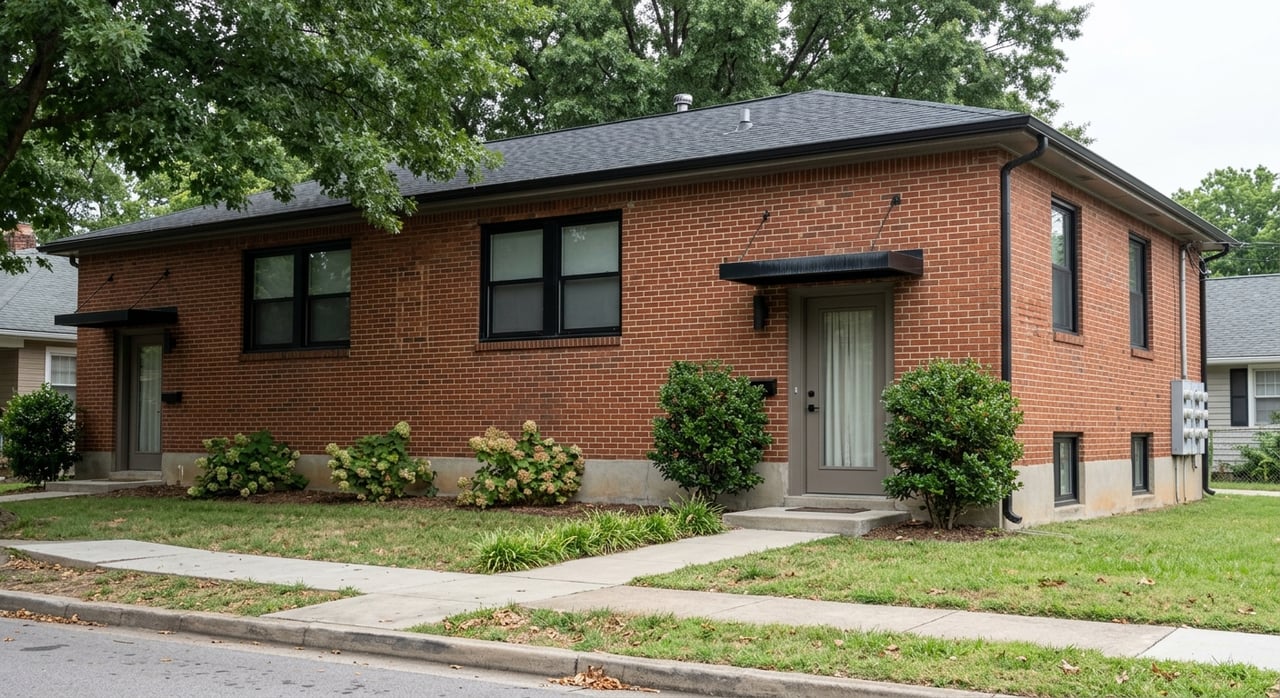
If you are investing in Chattanooga, the biggest mistake is treating every neighborhood the same. A buy-and-hold plan that makes sense in Hixson may not pencil out in Fort Wood, and a rehab opportunity in St. Elmo comes with a very different risk profile than a small multifamily play near the urban core. If you want stronger decisions and fewer surprises, you need to match your strategy to the submarket. Let’s dive in.
Why neighborhood fit matters
Chattanooga looks more balanced than overheated right now, which creates opportunities for investors who stay selective. Recent market data shows a citywide median sale price around $350,000, about 38 days on market, roughly 2,000 homes for sale, a median asking price near $375,000, and a 99% sale-to-list ratio in a balanced market environment.
That backdrop matters because balanced markets tend to reward discipline. Instead of chasing any available property, you can compare price, rent support, entitlement risk, and resale liquidity by area. In a city like Chattanooga, those differences show up fast from one neighborhood to the next.
Chattanooga also has a broad demand base that supports multiple investment approaches. Interstate access, a diversified manufacturing, technology, and service economy, four colleges, plus the city’s riverwalk and greenway system all add to the long-term case for both renters and future buyers.
Buy-and-hold works best in steady-demand areas
If your goal is stable long-term rental performance, Chattanooga’s higher-amenity and commute-friendly areas deserve a close look. These neighborhoods often benefit from access to the riverfront, greenways, established retail nodes, and everyday convenience, which can help support rent levels over time.
North Chattanooga and Northshore
North Chattanooga stands out as a premium buy-and-hold market. Research points to a median listing price around $550,000 and median rent near $2,250, which suggests a stronger fit for quality long-term holds than for deep-discount renovation plays.
For investors, that usually means focusing on durable assets with broad appeal at resale. Single-family homes and well-located attached properties can make more sense here than properties that depend on a heavy value-add story to work.
Hixson, East Brainerd, and Lookout Valley
Hixson, East Brainerd, and Lookout Valley also align well with a long-hold strategy. Reported price and rent levels come in around $387,000 and $1,750 in Hixson, $420,000 and $2,550 in East Brainerd, and roughly $399,000 and $1,800 in Lookout Valley.
These areas may offer a steadier underwriting path because you are not relying as much on major zoning changes, aggressive rehab budgets, or niche buyer demand. If you want a cleaner single-family rental thesis, these submarkets fit that profile better than more complex in-town renovation zones.
Rehabs fit older housing stock
Value-add investing in Chattanooga is less about finding a random fixer and more about targeting neighborhoods with older homes, wider pricing spreads, and enough local demand to absorb a renovated product. That makes certain historic and inner-core areas more appealing, but it also raises the need for careful planning.
St. Elmo and Fort Wood
St. Elmo and Fort Wood are two of the clearest examples. St. Elmo includes housing dating back to the 1880s, with Queen Anne, Colonial Revival, Craftsman/Bungalow, and Tudor Revival styles still present. Fort Wood includes historic 2.5-story buildings and design expectations tied to porches, rear-alley parking, and scale controls.
That historic character can create strong renovation appeal, but it also changes the math. Exterior changes and new construction in St. Elmo, Fort Wood, Battery Place, and Ferger Place are reviewed by Chattanooga’s Historic Zoning Commission, and the city began using updated historic guidelines on May 22, 2026.
If you are underwriting a rehab in one of these districts, build in extra time for review and be realistic about finish selections, scope revisions, and approval timing. A project can still be attractive, but the margin for error is usually smaller.
Highland Park and nearby inner-core areas
For lower-basis cosmetic or moderate value-add opportunities, Chattanooga’s inner-city price ladder is useful. Research shows Highland Park around $389,900 with 43 days on market, Ridgedale near $320,500, ZIP code 37404 around $325,000, 37412 around $299,000, 37411 about $259,000, and East Chattanooga and Avondale lower at roughly $228,000 and $217,500.
These numbers suggest more room to source projects at different entry points, especially if you are looking for a lighter rehab rather than a full historic restoration. The key is staying specific. One block, one property condition issue, or one permitting complication can change the return profile quickly.
Small multifamily favors the urban core
If you are exploring duplexes, triplexes, fourplexes, or adaptive-reuse opportunities, the urban core offers the clearest strategic fit. This is where walkability, mixed-use growth patterns, and rental demand align more naturally with small multifamily ownership.
Focus on 37403 and nearby districts
Research highlights ZIP code 37403 with a median listing price near $394,150, median rent around $2,100, 47 days on market, and buyer’s-market conditions. Downtown Chattanooga, Southside, Highland Park, MLK, Fort Wood, and Riverfront appear in that same urban market set.
That matters because these are the parts of the city where a small multifamily thesis is easiest to defend. If you are trying to balance rental demand, location appeal, and future exit flexibility, this cluster deserves attention.
Form-based zones shape the opportunity
Chattanooga’s form-based code, often called FBC zoning, is designed to support urban, mixed-use, walkable growth in areas like Northshore, Riverfront, City Center, Martin Luther King, Southside, The Bend, Westside, and Chestnut Street. In practical terms, that can make urban infill and attached housing concepts easier to evaluate than in lower-density areas.
Still, investors should not assume a simple path. The city requires neighborhood association input for many FBC projects, so timing and community process can affect your deal even when the location looks strong on paper.
Incentives can matter on larger rentals
For larger attached rental projects, Chattanooga also offers a Voluntary Incentives Program. According to the city, eligible projects can receive waivers of certain zoning and land-use requirements when 10% of units are priced for households at or below 80% of area median income for 30 years, along with density, parking, and in some cases height bonuses.
One Westside is the best-known large-scale example. The city says the plan will revitalize 300 acres of riverfront, add more than 1 million square feet of commercial space, and create thousands of new homes, with at least 10% of Bend rental units reserved for households at or below 80% of area median income.
Land plays depend on entitlement clarity
Raw land can be tempting in a growing metro, but in Chattanooga, land investing is rarely about price alone. The stronger thesis usually depends on access, utilities, buildability, flood risk, and a realistic rezoning path.
The city’s zoning resources point users to GIS maps, a flood-risk property map, and formal zoning verification letters. Rezoning also runs through the Regional Planning Agency, which means investors need to understand process as much as potential.
In a city shaped by the Tennessee River gorge, ridges, and protected open space, not every parcel is equally usable. Some of the most durable land strategies involve utility-served infill parcels, assemblage opportunities, or redevelopment sites where the entitlement path is already visible.
ADUs can support infill strategy
Accessory dwelling units can also play a role in Chattanooga investment planning, especially for owners thinking about backyard rentals or multigenerational housing. The city now allows ADUs on single-family lots, but the ordinance includes important limits.
An ADU is capped at 700 square feet, only one is allowed per lot, and it cannot be placed in the front-yard setback. The ordinance also does not override HOA rules or historic-district guidelines.
That means ADUs are usually most useful in non-historic areas without HOA restrictions that limit the concept. For the right lot, they can create added flexibility, but they are not a universal solution across the city.
A simple way to match strategy
If you are narrowing your search, this quick framework can help you stay aligned with Chattanooga’s neighborhood patterns.
| Strategy | Best-fit areas | Why it fits |
|---|---|---|
| Buy-and-hold SFR | Hixson, East Brainerd, Lookout Valley, North Chattanooga | Strong rent support, established demand, cleaner long-term hold case |
| Historic rehab | St. Elmo, Fort Wood, Highland Park | Older housing stock and renovation appeal, but more review and design constraints |
| Small multifamily | Downtown, Southside, Northshore, MLK, Westside, The Bend, 37403 | Urban demand, walkable growth, and better alignment with FBC areas |
| Land and assemblage | Infill and redevelopment parcels with clear utilities, access, and rezoning path | More durable thesis when entitlement risk is understood early |
How to evaluate your next Chattanooga deal
Before you move forward, ask a few practical questions about the neighborhood first, not just the property. Is this area best suited for a long-term hold, a controlled rehab, an urban rental concept, or a land play with entitlement work? The answer should shape everything from your offer price to your timeline.
You should also confirm whether the property falls in a historic district, an FBC area, or a location with flood-risk or access limitations. Those issues are not automatic deal breakers, but they can affect your budget, schedule, and exit options.
Finally, make sure your strategy matches the neighborhood instead of forcing the neighborhood to match your strategy. In Chattanooga, that discipline can be the difference between a smooth acquisition and a costly lesson.
Whether you are targeting a single rental, a small multifamily asset, a land assemblage, or a 1031 exchange move, local context matters. If you want help evaluating where a property fits in the Chattanooga market, connect with Grace Frank for strategic, data-informed guidance.
FAQs
What Chattanooga neighborhoods fit buy-and-hold rentals best?
- Hixson, East Brainerd, Lookout Valley, and North Chattanooga are among the clearest fits for long-term hold strategies because they show stronger rent support and established demand.
What Chattanooga neighborhoods are best for rehab investing?
- St. Elmo, Fort Wood, Highland Park, and nearby inner-core areas often fit renovation strategies because of older housing stock and price variation, though historic review can affect timing and cost.
What should you know about historic districts in Chattanooga?
- Exterior changes and new construction in certain historic districts, including St. Elmo and Fort Wood, are reviewed by the Historic Zoning Commission, so investors should plan for added review time and design constraints.
Where does small multifamily investing make sense in Chattanooga?
- Downtown, Southside, Northshore, MLK, Westside, The Bend, and ZIP code 37403 are among the strongest urban-core locations for small multifamily and adaptive-reuse logic.
Can you build an ADU on an investment property in Chattanooga?
- Chattanooga allows one ADU per single-family lot, limited to 700 square feet and not allowed in the front-yard setback, but HOA rules and historic-district guidelines may still restrict the plan.
What matters most for Chattanooga land investing?
- Utilities, access, flood risk, topography, easements, and rezoning path usually matter more than price alone when evaluating a land or assemblage opportunity in Chattanooga.