Welcome to
213,011 people live in Chattanooga, where the median age is 36.9 and the average individual income is $40,180. Data provided by the U.S. Census Bureau.
Total Population
Median Age
Population Density
Average individual Income
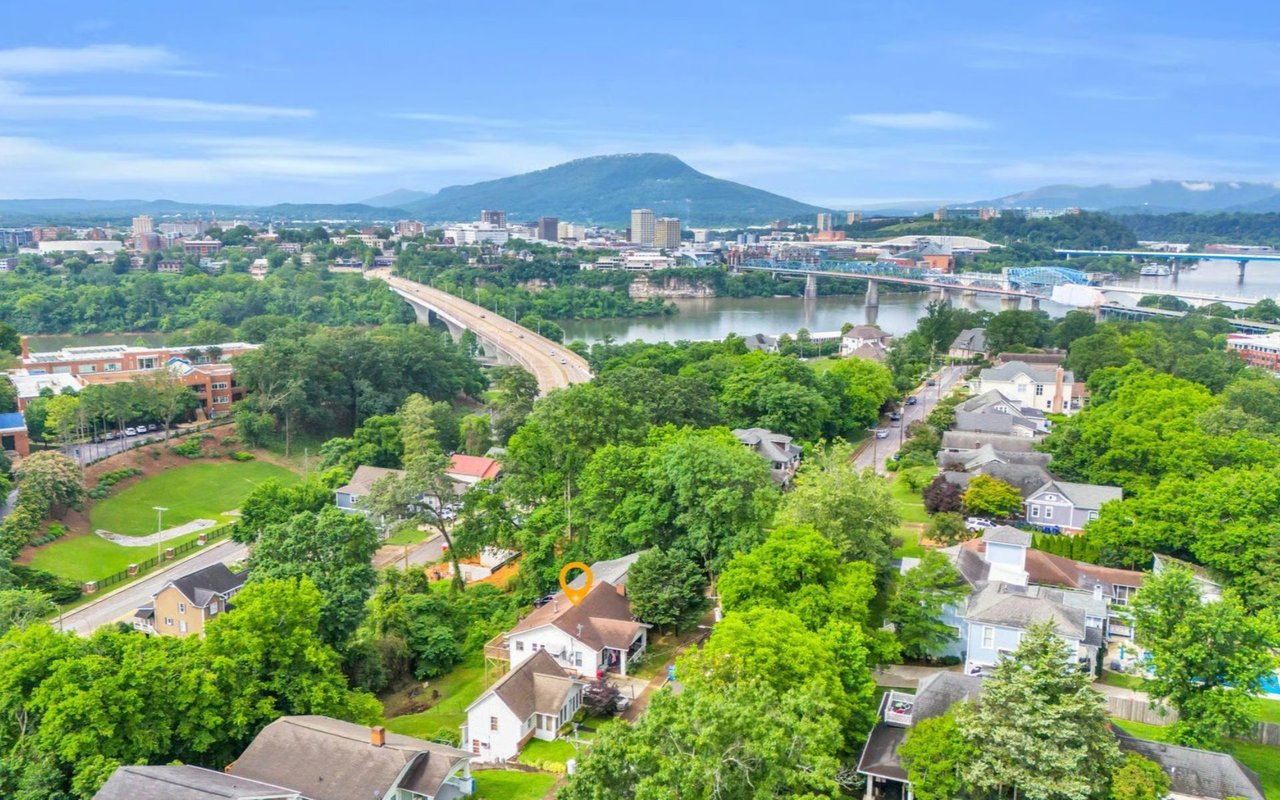
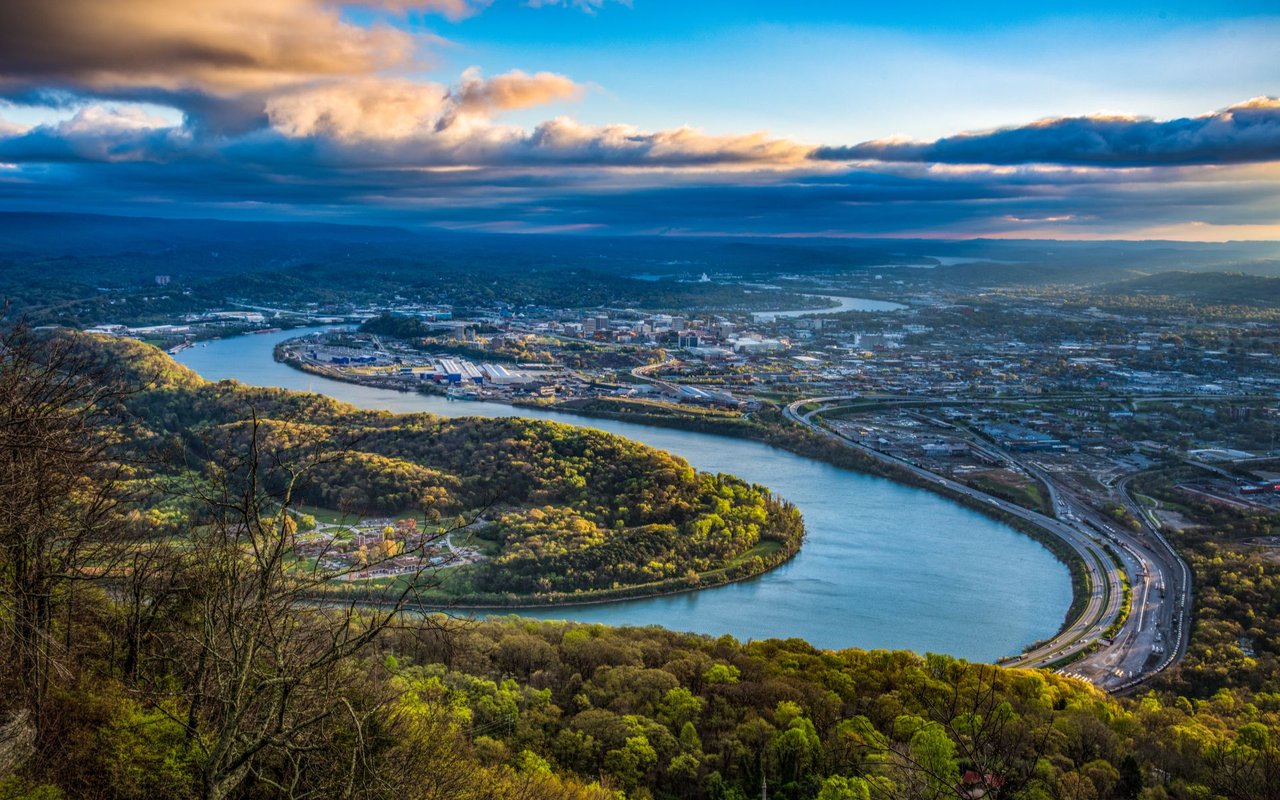
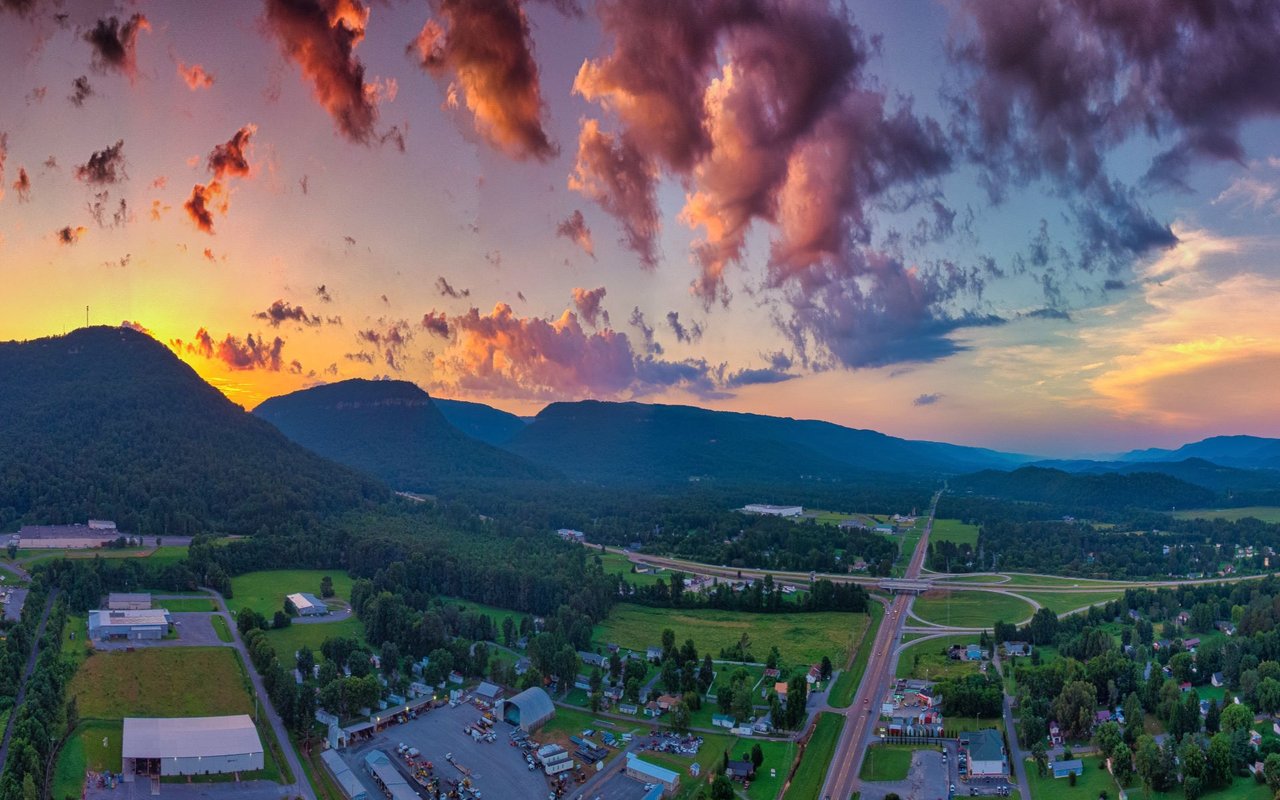
Chattanooga is one of the few cities in the Southeast where you can leave a downtown office at 5:15 and be on a hiking trail, a bouldering field, or a paddleboard by 5:40. That's not marketing language — it's a function of geography. The city sits inside a bend of the Tennessee River, hemmed in by Lookout Mountain, Signal Mountain, and Missionary Ridge, in the transition zone between the Ridge-and-Valley Appalachians and the Cumberland Plateau. Those ridges shape everything here: where the roads go, where the neighborhoods sit, and what a home is worth from one street to the next.
For buyers, the practical appeal is the combination that's getting harder to find. Median sale prices run in the $340,000 to $369,000 range. There's no state income tax on wages. The city owns its own utility, EPB, which delivers gigabit fiber to essentially every address in the service area. And you're roughly two hours from both Nashville and Atlanta without paying either city's housing prices.
What most relocation guides won't tell you is that Chattanooga is really a collection of micro-markets that behave very differently from one another. A ridge-top home on Signal Mountain and a Craftsman bungalow in Highland Park sit twenty minutes apart and follow completely separate pricing logic, buyer pools, and inspection concerns. Understanding that difference is most of what it takes to buy well here.
Chattanooga sits in southeastern Tennessee, right on the Georgia state line, which is why so many buyers here end up comparing homes across two states. Rossville, Ringgold, and Fort Oglethorpe, Georgia are all commutable, and Alabama's northeast corner is reachable for weekend properties.
The single most useful thing to understand about the layout is the river. The Tennessee River cuts horizontally through the city center, and it functions as the organizing line for how locals think about location.
South of the river you'll find Downtown, the Southside, the Innovation District, and the historic commercial corridors. This is the business and cultural core.
North of the river is the North Shore, Hill City, and the residential spread that runs north toward Hixson and eventually Soddy-Daisy.
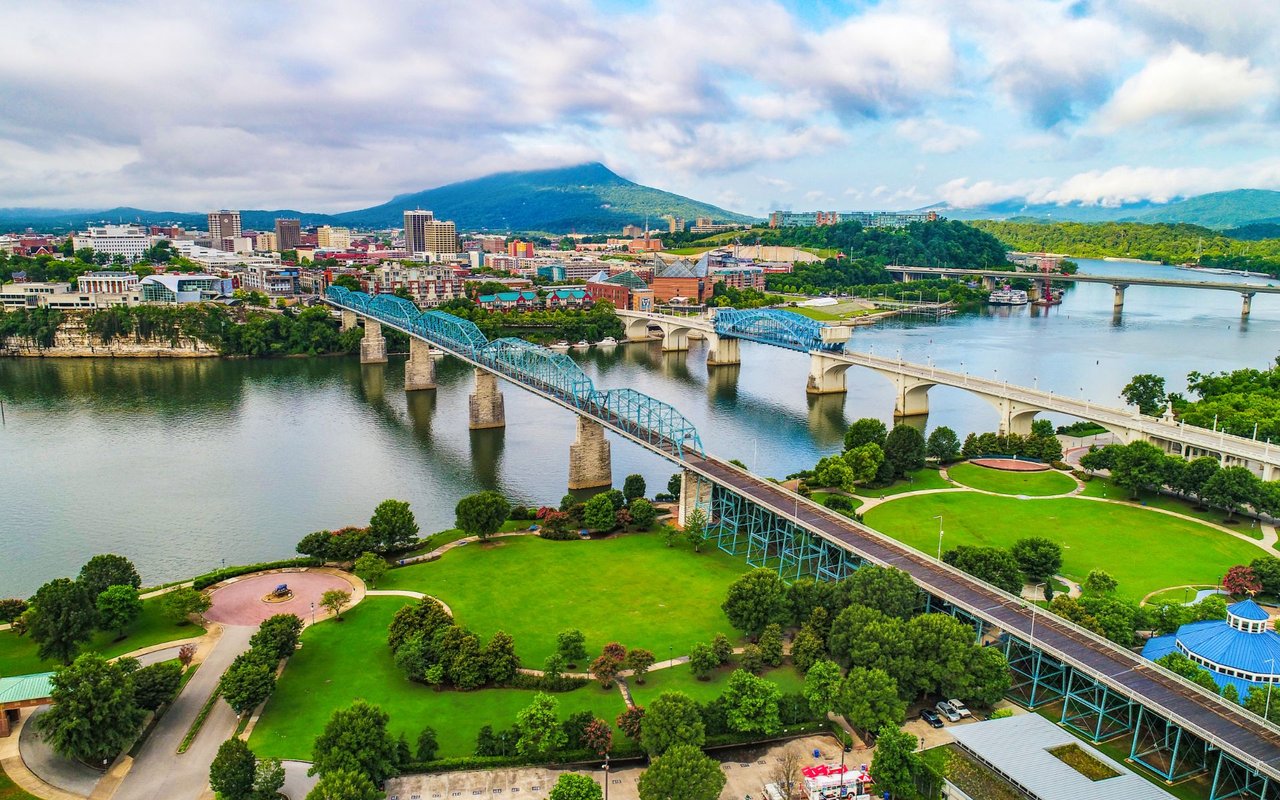
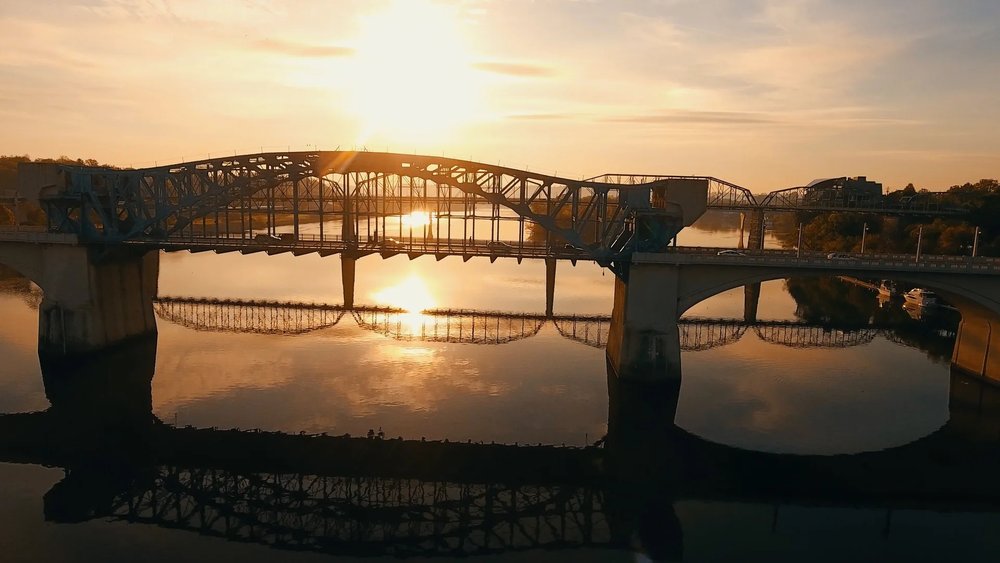
Three bridges do most of the work connecting the two sides: the Market Street Bridge, the Veterans Memorial Bridge, and the Walnut Street Pedestrian Bridge, which carries foot traffic only and is one of the longest pedestrian-only bridges in the world at 2,376 feet.
For highways, Interstate 24 skirts the southern edge of downtown, US-27 runs north-south straight through the middle, and Interstate 75 branches east toward the suburban retail corridors around Brainerd and Hamilton Place.
The second thing to understand is elevation. Signal Mountain, Lookout Mountain, and Missionary Ridge are all residential — real neighborhoods with real school zones, not just scenic overlooks. They run several degrees cooler in summer, carry higher price tags, and come with their own set of property considerations around slope, drainage, and access during the occasional winter ice event.
After the sharp appreciation of the post-pandemic years, the Chattanooga market has settled into something considerably more workable for buyers.
The current picture:
Metric | Where It Stands |
|---|---|
Median sale price | $340,000 – $369,000 (varies by city limits vs. metro) |
Average rent | ~$1,520 – $1,530 / month |
Market temperature | Balanced — buyers have room to negotiate and inspect |
Cost of living | Roughly 6% to 13% below the national average |
Inventory has expanded and buyers generally have time to do proper due diligence rather than waiving inspections to win a bid. That said, "balanced" is a citywide average and it hides real variation. Move-in-ready homes in the strongest school zones — Signal Mountain in particular — still draw multiple offers and move fast. Meanwhile, homes needing work, homes with deferred maintenance, or homes priced on last year's comps are sitting.
The seller's takeaway is that pricing discipline matters more now than it has in five years. Overpricing by even 5% in this market usually means a price cut and a longer marketing period, and the eventual sale price tends to land below what correct initial pricing would have produced.
The buyer's takeaway is that leverage is real but uneven. You'll have more of it in the outer suburbs and on properties with condition issues, and less of it in walkable core neighborhoods and top-tier school zones.
This is where Chattanooga gets interesting, and where generic search-portal data tends to mislead people. Below are the areas most buyers seriously consider, with the price ranges we're actually seeing.
Neighborhood | Price Range | Best Suited For | What Defines It |
|---|---|---|---|
North Shore | $450,000 – $800,000+ | Walkability, urban professionals, young families | Directly across the river from downtown. Coolidge Park, Renaissance Park, and the Frazier Avenue shopping and dining strip. The most consistently in-demand area in the city. |
Southside | $400,000 – $750,000 | Arts, nightlife, loft living | Converted rail yards turned into lofts, breweries, and restaurants. Home to the Chattanooga Choo Choo and the Main Street dining corridor. |
St. Elmo | $320,000 – $550,000 | Historic character, outdoor access | Sits at the literal foot of Lookout Mountain. Victorian and Queen Anne homes, the Incline Railway, and trailheads within walking distance. |
$500,000 – $1,000,000+ | Top-rated schools, quiet suburban living | A mountain-top town 15 minutes from downtown. Large lots, cooler temperatures, and the strongest zoned public schools in Hamilton County. | |
$300,000 – $500,000 | Families, newer construction | The eastern suburban corridor. Master-planned communities, modern subdivisions, and the Hamilton Place retail hub. | |
$275,000 – $400,000 | First-time buyers, value, lake access | North of the river and consistently the best value in the county. Close to Chickamauga Lake and Chester Frost Park. | |
Highland Park / MLK | $280,000 – $450,000 | Investors, restoration projects | Historic districts just east of downtown. Early 1900s Craftsman bungalows, tree-lined streets, ongoing revitalization. |
Downtown and Bluff View deserve their own mention. Bluff View is a small, walkable historic district perched on a limestone bluff above the river — cobblestone paths, the Hunter Museum, a sculpture garden, and European-style courtyards. Inventory there is thin and turnover is slow, but it's some of the most distinctive real estate in the region.
A note on how to use these ranges: they describe the middle of each market, not the edges. St. Elmo has Victorians that trade well above $550,000 and cottages below $320,000. What the ranges are actually good for is telling you which neighborhoods deserve a showing day and which don't fit the budget you're working with.
Chattanooga's affordability isn't a single number — it comes from three separate places, and it's worth knowing which is which.
Tennessee levies no personal income tax on earned wages. For a relocating household, this is usually the largest single swing in take-home pay, and it's the item most out-of-state buyers underweight when they compare Chattanooga to a city like Atlanta or Charlotte.
Housing runs 15% to 21% below the national average. That's the bulk of the day-to-day savings.
Utilities run about 17% below average, and this is where EPB matters. The Electric Power Board is a municipal utility that provides both electricity and citywide 100% fiber-optic gigabit internet as a public service. For remote workers evaluating a move here, that's a genuine differentiator — the fiber network is reliable, fast, and competitively priced, and it reaches essentially the whole service territory rather than just the dense core.
Category | vs. National Average | Typical Monthly Range |
|---|---|---|
Housing | ~15–21% below | Single: $1,250 – $1,688 · Family: $1,733 – $2,200 |
Utilities & gigabit internet | ~17% below | $150 – $220 |
Groceries | ~20% below | Single: $300 – $430 · Family: $950 – $1,100 |
Transportation | ~15% below | Gas slightly below national benchmarks |
The offset is sales tax. Combined state and local sales tax in Hamilton County is 9.25%, which is high by national standards. Groceries are taxed at a reduced state rate of 4%. For most households, the absence of income tax more than covers the sales tax difference — but if your spending pattern is unusually consumption-heavy, run your own numbers.
Public education across the county is run by Hamilton County Schools. District-wide performance sits near state medians, and that average conceals significant variation between individual schools. This is one of the most important things for relocating families to understand before they choose a neighborhood.
There are three realistic paths families take here.
Zoned public schools. The strongest zoned schools in the county are on Signal Mountain — Signal Mountain Middle/High and Nolan Elementary — along with East Hamilton High School on the east side. School zoning is a primary driver of price in these areas, and it's the main reason Signal Mountain commands the premium it does.
The magnet system. Rather than relying on zoning alone, many Chattanooga families use Hamilton County's School Choice Lottery to access specialized magnet programs. The strongest options include the Chattanooga School for the Arts and Sciences (CSAS), a K-12 program built on Paideia principles; the Chattanooga School for the Liberal Arts (CSLA), a K-12 humanities magnet; the Center for Creative Arts (CCA), a 6-12 arts magnet; and STEM School Chattanooga, a high school located on the Chattanooga State campus. The lottery is competitive and has firm deadlines, so families relocating mid-cycle should plan around it.
Private schools. Chattanooga has an unusually dense concentration of prestigious college-preparatory schools for a city its size — a legacy of its industrial-era wealth. McCallie School is a historic all-boys boarding and day school for grades 6–12. Girls Preparatory School (GPS) is its all-girls counterpart. Baylor School is co-ed boarding and day on a 670-acre riverfront campus. Boyd-Buchanan and Notre Dame round out the faith-based K-12 options.
For higher education, the University of Tennessee at Chattanooga (UTC) sits downtown with roughly 11,000 students and well-regarded programs in business, engineering, nursing, and computer science. Chattanooga State Community College handles technical training and dual-enrollment.
Average commute times here run 18 to 22 minutes. For a city with this much geographic constraint, that's remarkably good — but the averages hide two specific chokepoints that will affect your daily life depending on where you buy.
The Ridge Cut on I-24, east of downtown near the I-75 junction, backs up during rush hour. Chattanooga sits at the intersection of I-24, I-75, and I-59, and the freight volume that earns the region its "Freight Alley" nickname passes through this stretch.
The Olgiati Bridge on US-27 is the primary river crossing for commuters moving between downtown and the northern suburbs — Hixson, Soddy-Daisy, and points beyond. If you're considering a home north of the river with a downtown job, drive that bridge at 8:00 a.m. before you write an offer.
On transit, CARTA runs the regional bus network, and it operates a completely free, zero-emission Electric Shuttle connecting Downtown, the North Shore, and the Southside. Within that core triangle, living car-light is genuinely feasible. Outside it, a vehicle is essentially required — this is one of the honest limitations of the city.
Bike Chattanooga adds a citywide bike-share with more than 40 stations and 300+ regular and e-bikes, tied into the paved trail network.
For air travel, Chattanooga Metropolitan Airport (CHA) is 15 to 20 minutes east of downtown with direct service to Atlanta, Charlotte, Chicago, Dallas, and Washington D.C. Most other destinations route through Atlanta, and plenty of residents drive to Atlanta Hartsfield for international trips.
The "Scenic City" nickname is earned. Chattanooga is a legitimate national destination for climbing, paddling, and mountain biking — not a city that happens to have some parks.
The Tennessee Riverwalk is the backbone: more than 16 miles of continuous paved pathway running from Chickamauga Dam through downtown and out to St. Elmo. It's used for commuting as much as recreation, and proximity to it is a real value-add on a listing.
For hiking and trail running, Lookout Mountain, Signal Mountain, and Prentice Cooper State Forest offer hundreds of miles of protected trail. Sunset Rock, Snooper's Rock, and Rainbow Falls are the classic destinations.
For climbing, this is one of the best addresses in the country. Sunset Rock covers trad, the Stone Fort (Little Rock City) is a world-class bouldering venue, and High Point Climbing & Fitness downtown features multi-story climbing walls on the building's exterior glass facade.
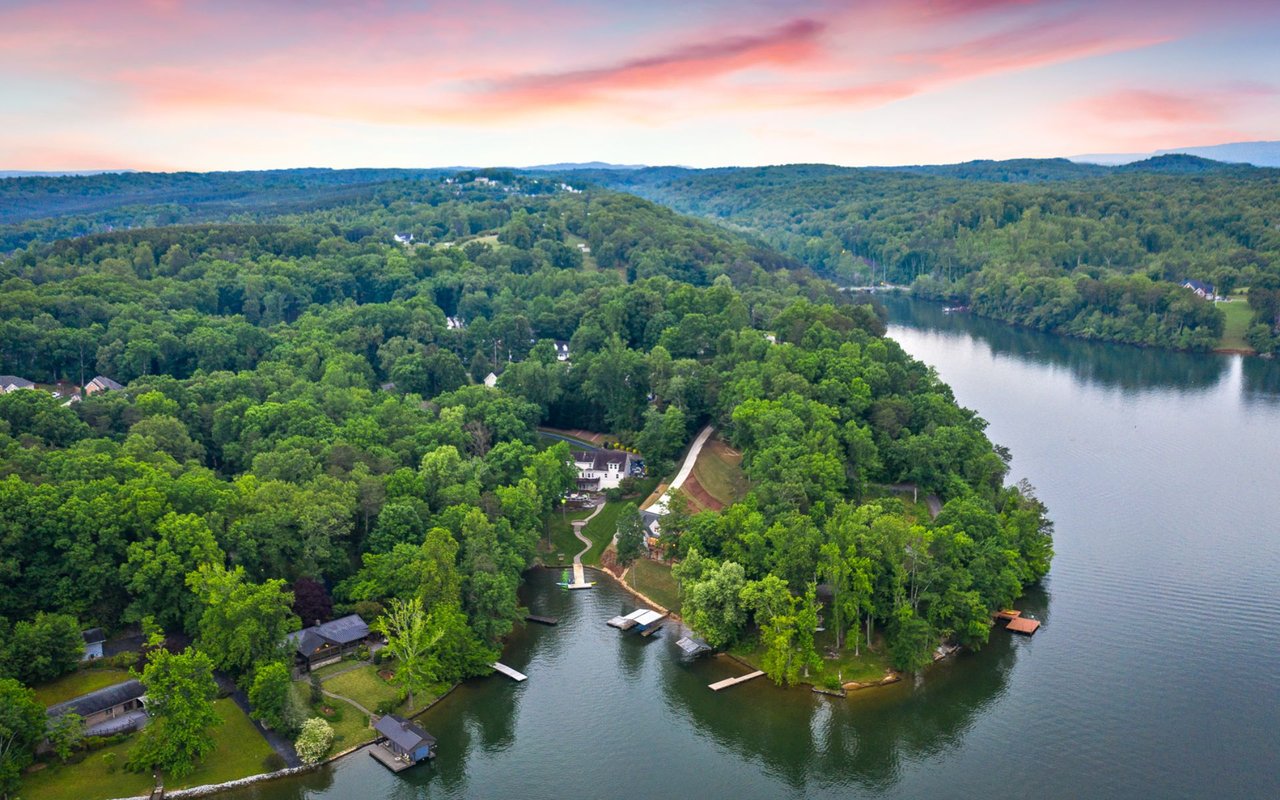
For water, you can paddleboard or kayak flatwater right through downtown, Chickamauga Lake handles the boating and fishing crowd to the north, and the Ocoee River — 45 minutes east, and a former Olympic whitewater venue — has some of the best rafting in the Southeast.
For mountain biking, Raccoon Mountain offers 30-plus miles of singletrack around a hilltop reservoir, and Enterprise South Nature Park adds accessible trails on the east side.
Nearly all of this sits within a 20-minute drive of downtown. When buyers ask me what makes Chattanooga different from other affordable Southeastern cities, this is the answer.
The dining scene here punches above the city's population. Easy Bistro & Bar in the West Village does French-influenced Southern cooking with raw oysters and serious cocktails. Whitebird, inside The Edwin Hotel near the pedestrian bridge, works in modern Appalachian with local farm sourcing. Scottie's on the River puts you on a patio directly over the water. In Bluff View, Tony's Pasta Shop and Rembrandt's Coffee House handle house-made pasta and hand-roasted coffee in a courtyard setting that feels transplanted from Europe.
For performance, the Tivoli Theatre and Soldiers and Sailors Memorial Auditorium are the historic anchors, hosting Broadway tours, classical programs, and national touring acts.
Nightlife skews casual and neighborhood-based rather than concentrated in a single district. Whiskey Thief, the rooftop bar atop The Edwin, has the best views in the city — river, bridge, and ridgeline. The Southside carries the brewery and late-night weight.
In summer, Riverfront Nights brings free concerts to Ross's Landing along the water, and it's one of the better free-entertainment traditions in the region.
Chattanooga's downtown revitalization is frequently cited as a national model, and the riverfront is where you see the result most clearly.
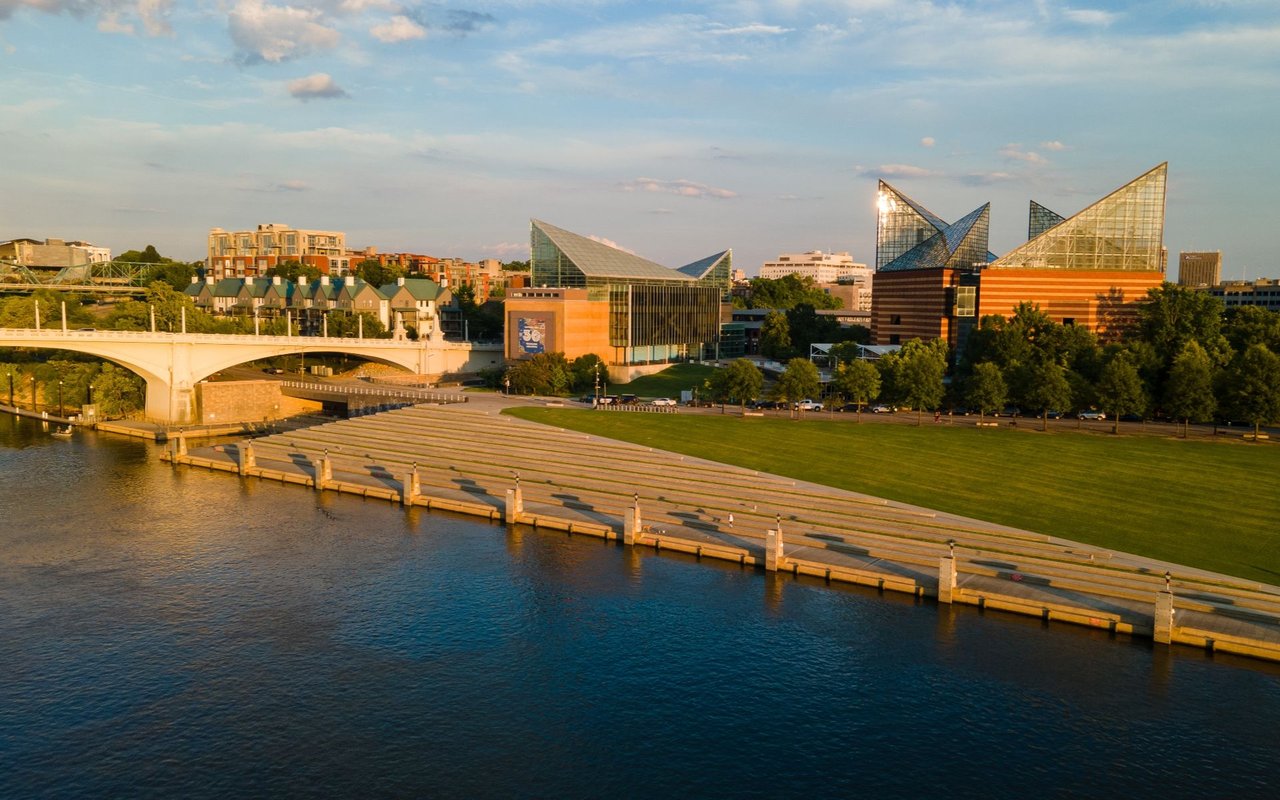
The Tennessee Aquarium at Ross's Landing anchors the whole district, with twin freshwater and ocean pavilions. Ross's Landing itself is a riverfront park hosting outdoor events and concerts, and it marks the starting point of the Riverwalk.
Above it, the Hunter Museum of American Art sits on a 90-foot limestone bluff, spanning a century of American art across three connected structures — a 1905 mansion, a mid-century brick wing, and a modern steel addition. The building itself is worth the visit.
The Bluff View Art District wraps around the museum: cobblestone walkways, the River Gallery Sculpture Garden, artisan bakeries, and coffee shops, all overlooking the water.
And the Walnut Street Pedestrian Bridge, built in 1891 and converted to foot traffic, links Downtown directly to the North Shore. It's the reason North Shore commands the prices it does — you can walk from Frazier Avenue to a downtown office in about fifteen minutes.
Chattanooga runs a roughly $34 billion regional economy that has moved well beyond its industrial roots. The city was the first in the nation to deploy municipal gigabit fiber, and EPB is now building out what's positioned as America's first quantum computing and networking hub.
The economy rests on four pillars:
Advanced manufacturing and automotive, anchored by Volkswagen's $3.5B+ assembly complex producing the electric ID.4, plus McKee Foods (Little Debbie) and Roper Corporation.
Freight and logistics. Sitting at the junction of I-24, I-75, and I-59, Chattanooga is headquarters to major carriers and 3PLs including Kenco Group, Covenant Transport, and Steam Logistics.
Healthcare, led by Erlanger Health System, CHI Memorial, and Parkridge Medical Center.
Insurance and financial services, with BlueCross BlueShield of Tennessee and Unum Group both headquartered here.
Employer | Industry | Approx. Local Workforce |
|---|---|---|
Erlanger Health System | Healthcare | ~6,000 |
Hamilton County Schools | Education | ~5,800 |
Volkswagen Chattanooga | Automotive Manufacturing | ~5,200 |
BlueCross BlueShield of TN | Health Insurance | ~4,100 |
Tennessee Valley Authority | Energy & Federal Utility | ~3,800 |
CHI Memorial Hospital | Healthcare | ~3,700 |
McKee Foods | Food Manufacturing | ~3,200 |
Unum Group | Insurance | ~3,100 |
The honest caveat: if you're coming from a major coastal tech or finance market, the high-wage corporate job market here is thinner than what you're used to. The remote workers who relocate for the fiber and the cost of living generally do very well. Those looking to replace a large-market salary locally should research their specific field before committing.
Chattanooga has a humid subtropical climate with four genuinely distinct seasons. The valley geography moderates winter temperatures, and the same geography traps humidity in July and August.
Spring (March–May) moves from mid-60s to lower 80s. It's beautiful — the mountains bloom — and it's also the wettest stretch of the year.
Summer (June–August) sits consistently at 88°F to 91°F with high humidity and frequent afternoon thunderstorms. Mountain-top neighborhoods like Signal Mountain and Lookout Mountain run noticeably cooler, which is exactly why they were developed as summer retreats in the first place.
Fall (September–November) is the best season here, and it isn't close. Crisp air, clear skies, and strong foliage across the ridges. Highs slide from 84°F in September to around 62°F in November.
Winter (December–February) is mild and damp. Daytime highs average 50°F to 55°F, with overnight lows near freezing.
Climate Metric | Annual |
|---|---|
Rainfall | ~55–58 inches, spread evenly through the year |
Snowfall | ~2–4 inches, typically one or two light events |
Sunny days | ~207 |
The rainfall total is worth flagging for buyers. Fifty-five-plus inches a year, combined with hillside topography and river proximity, means drainage, grading, and flood zone designation deserve real attention during due diligence.
Whether Chattanooga fits depends on what you're optimizing for. Here's the honest ledger.
Strengths | Trade-offs |
|---|---|
Outdoor access. World-class climbing, biking, trail running, and paddling within 15–20 minutes of downtown. | School variability. Performance across Hamilton County Schools ranges widely; the best magnets require navigating a lottery. |
No state income tax. Tennessee doesn't tax earned wages, keeping the total burden low. | Limited transit. CARTA is solid inside the downtown core and thin outside it. A car is close to mandatory. |
Gigabit fiber citywide. EPB's municipal network is reliable, fast, and competitively priced. | Chokepoint traffic. The I-24 Ridge Cut and the river crossings congest at rush hour, worsened by freight volume. |
Cost of living 6–13% below national average, with housing well below that. | 9.25% sales tax. High by national standards, offsetting part of the income tax savings. |
The short version: Chattanooga rewards people who want access to nature, a mid-sized city scale, strong digital infrastructure, and moderate costs. It's a harder fit if you depend on public transit, need a high-wage corporate job market, or want uniformly strong zoned schools regardless of where you buy.
Chattanooga's topography creates price micro-climates that don't show up in national valuation models. Two homes a quarter-mile apart can differ substantially in value based on which side of a ridge they sit on, which school they're zoned for, and whether the lot drains toward the street or away from it. That's why local expertise matters more here than in a flat, uniformly-gridded market.
What to look for in an agent here:
Micro-market knowledge. Your agent should be able to explain ridge-versus-valley pricing, know school zone boundaries by street, and understand historic preservation guidelines in districts like St. Elmo and Fort Wood before you fall in love with a property that carries restrictions you didn't anticipate.
Topography and water knowledge. Proximity to the Tennessee River and to mountain slopes means slope stability, soil conditions, drainage, and flood zone designation are live issues on a meaningful share of properties. An agent who treats these as afterthoughts will cost you money.
Network access. In North Shore, Southside, and the top Signal Mountain zones, the best listings often move through relationships before they hit the portals.
Questions worth asking any agent you interview:
How many transactions have you closed in this specific neighborhood in the past twelve months? How does your pricing approach differ between a historic home and a new suburban build? Which local lenders and inspectors do you recommend for properties with regional characteristics like hillside lots or century-old foundations?
If you're buying or selling in Chattanooga, the Grace Frank Group brings more than 25 years of experience across Hamilton County and the surrounding region — from historic homes in St. Elmo and Highland Park to ridge-top properties on Signal Mountain, lake-adjacent homes in Hixson and Soddy-Daisy, land parcels, and commercial and multi-family investments. Grace Frank is a licensed NAR member and a multi-year Best of the Best award recipient, known for straight answers, sharp negotiation, and a support network that keeps transactions moving through inspection, appraisal, and underwriting without surprises. Whether you're relocating from out of state and starting from scratch, or you've lived here for decades and are ready to sell, we'll give you an honest read on your options and a clear plan.
Grace Frank Group
101 W 21st Street, Chattanooga, TN 37408
(423) 544-7156
[email protected]
Reach out for a no-pressure conversation about your goals, a market-accurate valuation of your current home, or a private tour of the neighborhoods you're considering.
There's plenty to do around Chattanooga, including shopping, dining, nightlife, parks, and more. Data provided by Walk Score and Yelp.
Explore popular things to do in the area, including Candyland, Bridge Gifts & Cigars, and Hawaiian Ice.
| Name | Category | Distance | Reviews |
Ratings by
Yelp
|
|---|---|---|---|---|
| Dining | 0.36 miles | 0 reviews | 0/5 stars | |
| Dining | 0.36 miles | 0 reviews | 0/5 stars | |
| Dining | 0.38 miles | 0 reviews | 0/5 stars | |
| Dining | 0.49 miles | 0 reviews | 0/5 stars | |
| Dining | 0.72 miles | 0 reviews | 0/5 stars | |
| Shopping | 0.37 miles | 0 reviews | 0/5 stars | |
| Active | 0.08 miles | 3 reviews | 3.7/5 stars | |
| Active | 0.29 miles | 0 reviews | 0/5 stars | |
| Active | 0.37 miles | 0 reviews | 0/5 stars | |
| Active | 0.57 miles | 0 reviews | 0/5 stars | |
| Active | 0.71 miles | 0 reviews | 0/5 stars | |
| Active | 0.71 miles | 0 reviews | 0/5 stars | |
| Active | 0.81 miles | 0 reviews | 0/5 stars | |
| Active | 0.9 miles | 0 reviews | 0/5 stars | |
| Beauty | 0.19 miles | 0 reviews | 0/5 stars | |
| Beauty | 0.23 miles | 0 reviews | 0/5 stars | |
| Beauty | 0.28 miles | 0 reviews | 0/5 stars | |
| Beauty | 0.32 miles | 0 reviews | 0/5 stars | |
| Beauty | 0.32 miles | 0 reviews | 0/5 stars | |
| Beauty | 0.33 miles | 0 reviews | 0/5 stars | |
| Beauty | 0.46 miles | 1 review | 1/5 stars | |
| Beauty | 0.46 miles | 0 reviews | 0/5 stars | |
| Beauty | 0.49 miles | 0 reviews | 0/5 stars | |
| Beauty | 0.93 miles | 0 reviews | 0/5 stars | |
|
|
||||
|
|
||||
|
|
||||
|
|
||||
|
|
||||
|
|
Chattanooga has 90,570 households, with an average household size of 2.264. Data provided by the U.S. Census Bureau. Here’s what the people living in Chattanooga do for work — and how long it takes them to get there. Data provided by the U.S. Census Bureau. 213,011 people call Chattanooga home. The population density is 1,734 and the largest age group is Data provided by the U.S. Census Bureau.
Total Population
Population Density Population Density This is the number of people per square mile in a neighborhood.
Median Age
Men vs Women
Population by Age Group
0-9 Years
10-17 Years
18-24 Years
25-64 Years
65-74 Years
75+ Years
Education Level
Total Households
Average Household Size
Average individual Income
Households with Children
With Children:
Without Children:
Blue vs White Collar Workers
Blue Collar:
White Collar: